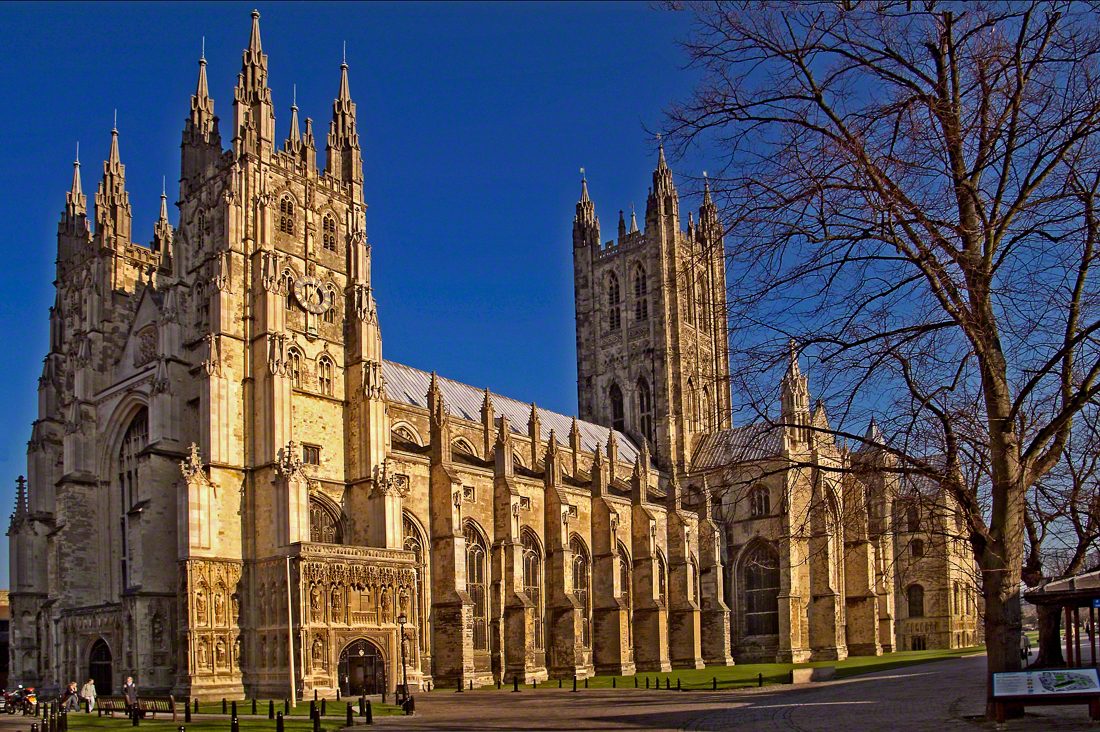
Canterbury Cathedral
A UNESCO World Heritage site known for its Romanesque and Gothic architecture. It serves as the cathedral of the Archbishop of Canterbury.
View the central Bell Harry Tower from the south-west churchyard.

Canterbury's compact medieval centre rewards walkers who set their own pace. The city's network of narrow lanes, Roman gates and riverside paths connects over two thousand years of history within a single square mile. This guide provides the information you need to design a walking route that matches your interests and available time.
Quick answer
A Canterbury self guided walking tour allows you to explore the city's historic centre at your own pace, covering medieval streets, cathedral precincts, Roman walls and riverside paths. The city centre remains accessible 24 hours daily, though most landmarks and interior spaces operate between 09:00 and 17:00. Self-guided exploration costs nothing beyond any app-based audio tours or specific site entries you choose to add.
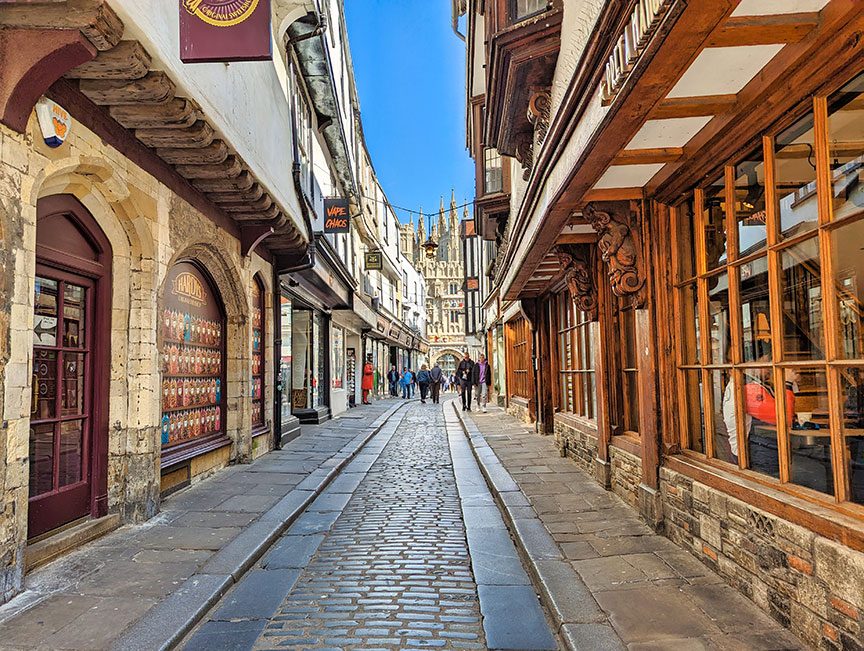
Canterbury's street plan has remained largely unchanged since the medieval period, when pilgrims walked these same cobbled lanes toward Becket's shrine. That continuity makes the city readable on foot without formal guidance—the cathedral still dominates sightlines, and fragments of Roman wall still define the boundaries. The most effective Canterbury self guided walking tour follows the arc of the medieval city wall, which traces a rough circle around the old town. Starting at Westgate—the only surviving medieval gatehouse—walkers move clockwise through Dane John Gardens, where a Roman mound overlooks the defensive circuit, then past the reconstructed Queningate toward Canterbury East station. The eastern wall section includes the best-preserved Roman masonry, built in the third century and later incorporated into medieval defenses. From there, the route turns north along the River Stour, passing converted watermills and ancient tannery sites before reaching the cathedral precincts. The Buttermarket, Mercery Lane and the Weavers' houses form a dense knot of timber-framed buildings between the river and cathedral gates, where Huguenot silk workers settled in the sixteenth century. This central quarter repays slow exploration—alleyways barely wide enough for a handcart connect hidden courtyards and shops built into structures five centuries old. Walking Canterbury without a scheduled tour means you control rest points and can revisit sections that warrant closer attention. The cathedral close, accessible through several gates, allows visitors to circle the building and examine its Norman stonework, Perpendicular additions and Victorian restoration work without entering. Greyfriars Chapel, the oldest Franciscan building in England, sits on a small island in the Stour and is often overlooked by visitors following prescribed routes. The Marlowe Theatre district, southwest of the Buttermarket, occupies the former Dominican friary grounds—excavations here revealed medieval kilns and tile floors now displayed beneath glass panels in the pavement. Most self-guided walkers complete the full circuit in two to four hours depending on interior visits and photographic stops. The terrain is level throughout, with modern paving on main streets and original cobblestones in quieter lanes. Daylight hours between 09:00 and 17:00 provide optimal conditions for photographing architectural detail and reading informational plaques, though the floodlit cathedral and empty streets after dark offer a different perspective. Spring and autumn bring fewer school groups and coach tours, leaving the narrow lanes more navigable for independent exploration.
“Canterbury's street plan has remained largely unchanged since the medieval period, when pilgrims walked these same cobbled lanes toward Becket's shrine.”
This half-day route suits first-time visitors and history enthusiasts, covering Canterbury's core medieval quarter in approximately 3–4 hours at a comfortable pace.
Begin at the cathedral's external grounds, circling the structure to appreciate its Gothic architecture and scale. Allow 15–20 minutes before deciding whether to enter (separate ticketed admission).
Walk through the historic shopping precinct, noting timber-framed buildings and the Christ Church Gate. Pause at the Eastbridge Hospital of St Thomas if open (small donation requested).
Head west to the medieval city gate, then follow the riverside path along the Great Stour. The 20-minute loop offers quieter views and photo opportunities of the overhanging buildings.
Continue east to the UNESCO World Heritage Site ruins (English Heritage site, check separate admission). Budget 30–40 minutes to explore the audio-guide trail through the grounds.
Conclude near St Margaret's Street, where the pedestrianised lanes converge. This zone clusters independent shops and the departure point for optional guided extensions.
A self-guided walking tour in Canterbury requires downloading a navigation tool, starting at a clear entry point, and following waypoints through the medieval street grid. The process takes 10–15 minutes to set up before you begin walking.
Install a route app like Google Maps with offline capability or a specialized Canterbury heritage app before you arrive. Most visitors forget to cache the map offline and lose signal in narrow medieval lanes with thick stone walls.
Position yourself at the Christ Church Gate entrance on Buttermarket to calibrate your GPS and orient the map northward. This landmark appears on every route and provides the clearest reference point for the street network.
Tap each numbered stop in order rather than skipping ahead, as the routes assume you're approaching from the previous location. Streets like Mercery Lane and Butchery Lane intersect at confusing angles, and out-of-sequence navigation causes wrong turns.
Confirm each waypoint in your app when you reach it so the route recalculates accurately if you detour. Failing to mark progress means the app will keep redirecting you backward to skipped locations.
Look for the brown heritage plaques on buildings and compare them to your app's descriptions to confirm you're at the correct site. Digital GPS can drift 10–20 meters in the dense city center, placing you on the wrong side of a block.
Canterbury City Centre is well-connected by rail and bus services, making it accessible for those starting a self-guided walking tour. Most visitors arrive at stations located within a short walking distance of the historic core.
Southeastern High Speed to Canterbury West
Southeastern line to Canterbury East
Stagecoach East Kent to Canterbury Bus Station
From Canterbury West Station to City Centre
Arriving between 09:00–17:00 provides optimal daylight for exploring medieval lanes and historic sites. Canterbury West station offers the most direct high-speed link for those traveling from London.
The best arrival window for your self-guided tour is 09:00–17:00, providing optimal daylight to navigate medieval lanes and historic sites. Planning your visit within these hours ensures clear visibility for street signage and building details.
—
Ideal for quiet exploration and photographing narrow lanes without congestion.
Mild, average 15°C to 20°C
Longer daylight hours provide more time for outdoor exploration.
Warm, average 18°C to 23°C
Expect busier streets due to peak tourism and summer holidays.
Cooler, average 12°C to 17°C
Comfortable temperatures and fewer crowds make for efficient walking conditions.
Verdict: The optimal time for a self-guided walking tour is Tuesday to Thursday, arriving between 09:00 and 17:00 during the months of May or September.
Self-guided exploration of Canterbury City Centre is available at no cost. Additional fees only apply if you choose to purchase third-party digital guides or app-based walking tours.
Verdict: A typical adult pays 0 GBP for self-guided exploration, with costs only occurring if third-party app-based tours are selected.
Canterbury features a dense collection of medieval architecture and historic sites within its city walls. These landmarks form the core of a self-guided route through the city centre.
A UNESCO World Heritage site known for its Romanesque and Gothic architecture. It serves as the cathedral of the Archbishop of Canterbury.
View the central Bell Harry Tower from the south-west churchyard.
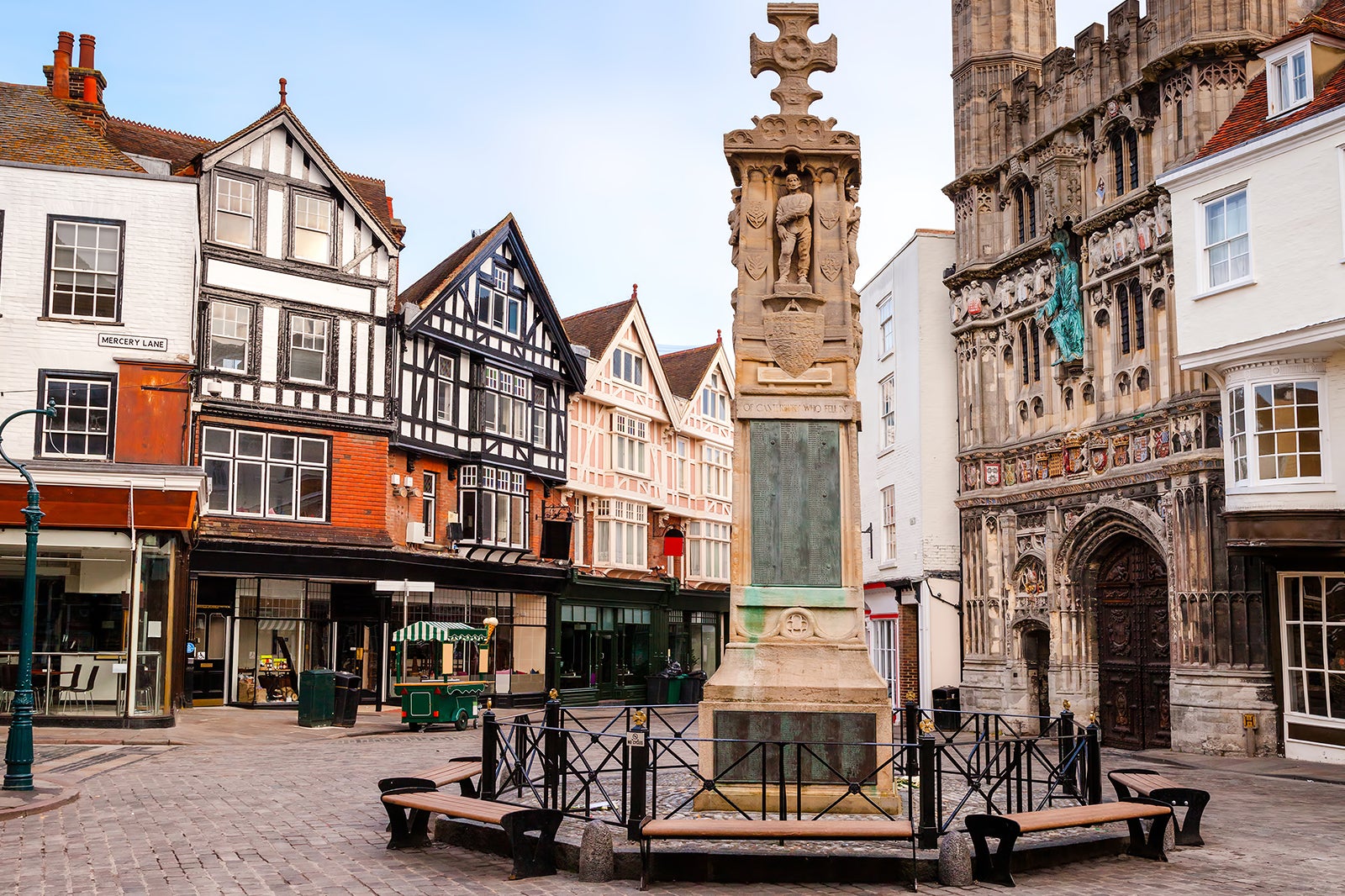
A historic thoroughfare featuring independent shops, cafes, and medieval timber-framed buildings. It connects the cathedral precinct to the rest of the city.
Walk early to photograph the timber-framed facades without crowds.
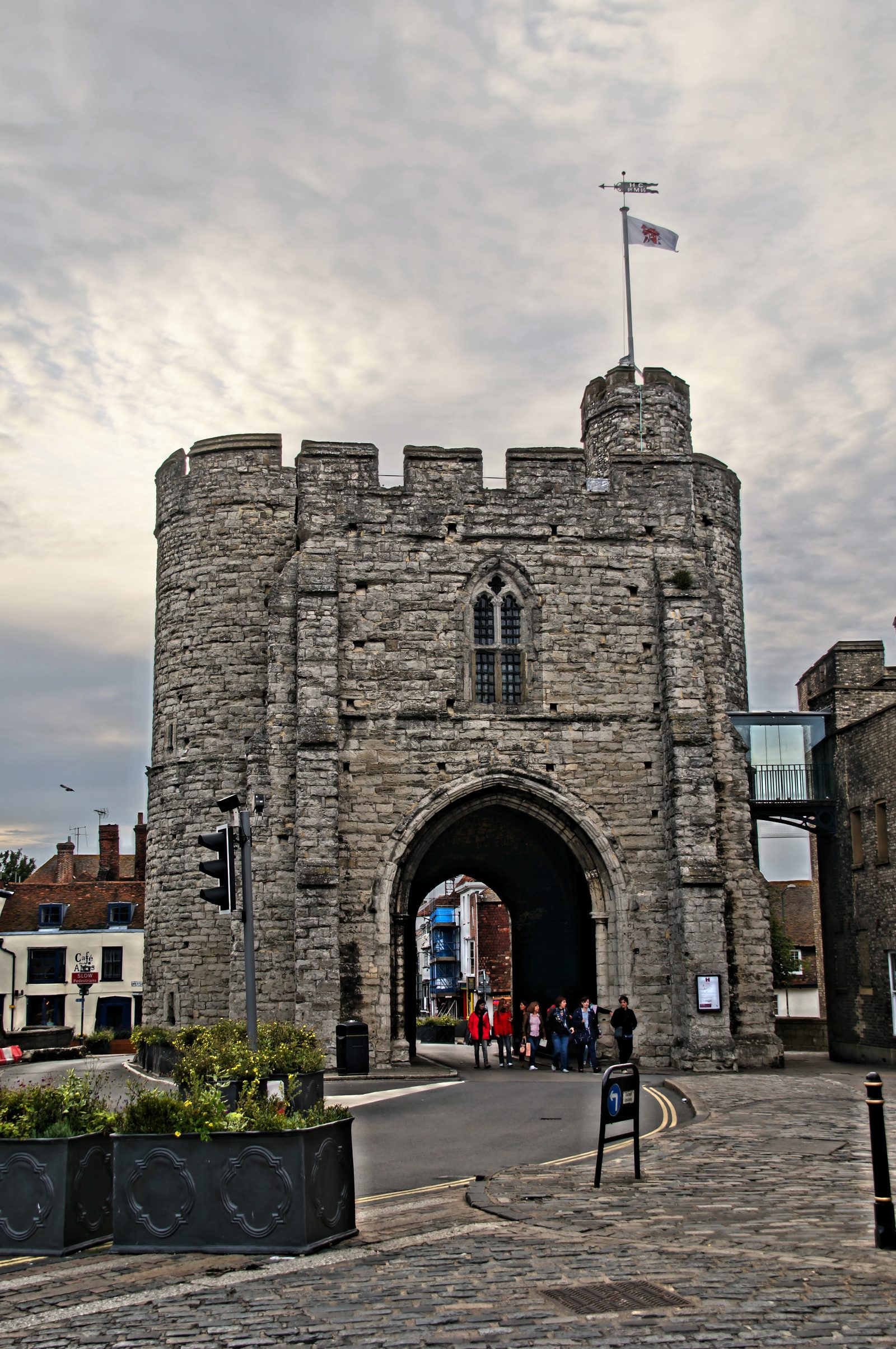
The last surviving medieval gatehouse in the city, dating back to 1380. It once functioned as a city gate and jail.
Look up at the stone crenellations from the public park nearby.
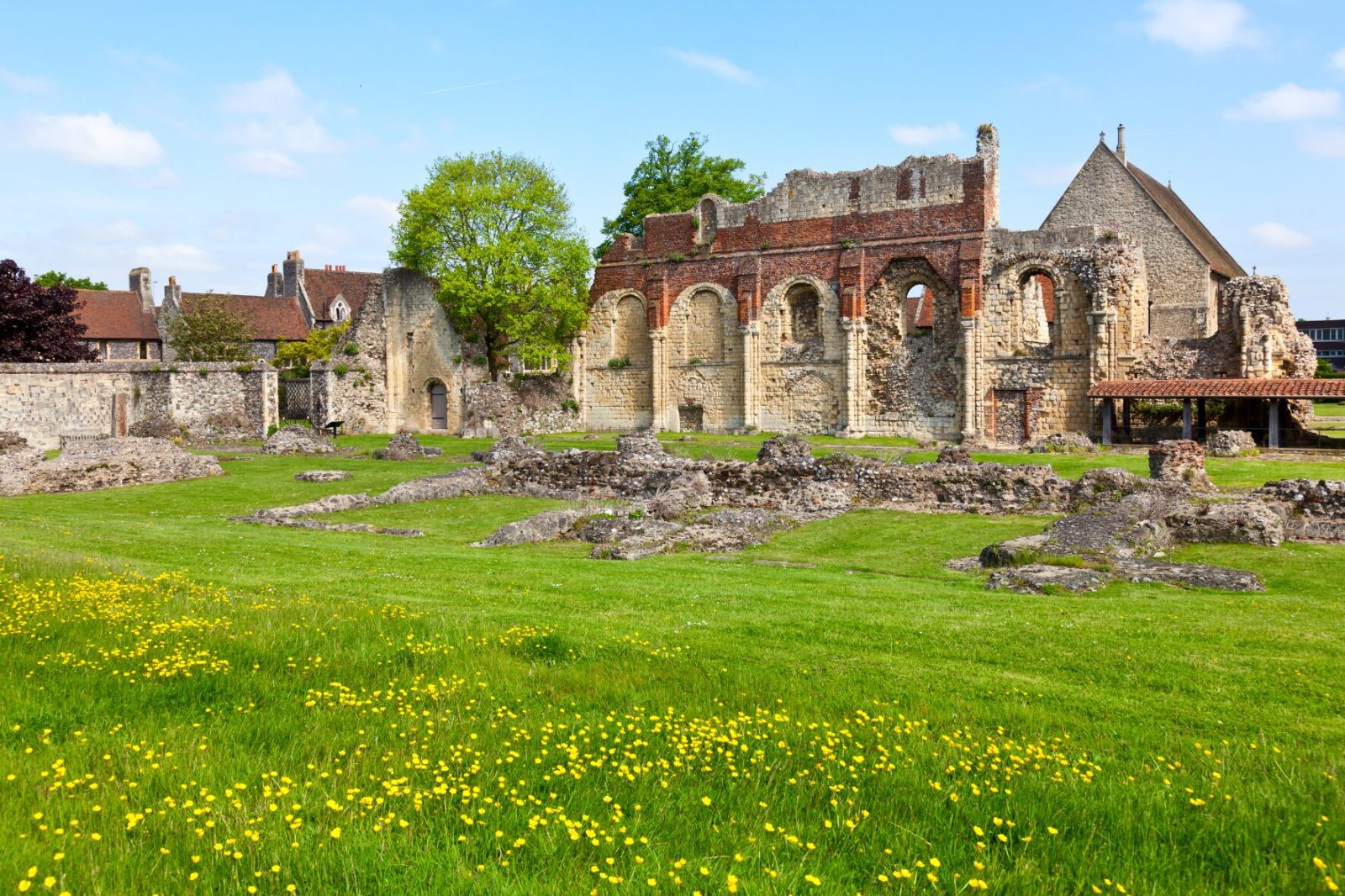
The ruins of a sixth-century abbey that marks the arrival of Christianity in England. The site is managed by English Heritage.
Walk the perimeter for clear views of the ancient stone ruins.
Everything you need to know about canterbury self guided walking tour
You can begin your journey at any time by selecting a digital map or app-based route. Simply navigate to your preferred starting point, such as the Westgate Towers, and follow the provided directions at your own pace.
Yes, multiple routes are available, ranging from short circular loops around the historic centre to longer paths that include the UNESCO World Heritage sites. These routes often utilize mobile apps or printed maps to guide you through medieval lanes and riverside gardens.
The city is compact and highly walkable, making it a comfortable experience for families with children. Most routes are level and avoid difficult terrain, allowing you to pause for breaks at local cafes or parks whenever needed.
While self-guided exploration of the city is free, some app-based tours or treasure-hunt style experiences may charge a fee for access to curated content. Entry fees for specific heritage sites like the cathedral are separate and not included in general walking routes.
No, there is no need to book a specific time slot for a self-led experience. You have the flexibility to start whenever you wish and can even finish your walk over multiple days if you choose.
A self-led tour is an excellent way to discover iconic sites like the cathedral, ancient castle ruins, and historic city walls. These walks allow you to spend as much time as you like observing architectural details at your own convenience.